Balancing the Brand EP1: Audrey Taylor
ADRIANNA: Welcome back to Balancing the Brand. I'm your host, Adrianna Kilian, and on this podcast, we go inside college athletics at the three main Arizona universities, ASU, U of A and NAU. We talk about NIL, or name, image and likeness, which has been a very hotly debated topic in recent years. With it officially being instated at select colleges and universities by the NCAA on June 30 in 2021 collegiate athletes are still getting used to the idea of being paid. While it's a way for them to get paid from external sources, on top of the stipend they received from the university for cost of living, it creates additional stress on them. Today, I'm joined by Audrey Taylor. She's a senior pursuing a bachelor's degree in psychology, set to graduate in 2026 from Northern Arizona University. On top of that, she's a women's basketball player at NAU and is president of this Student Athletic Academic Committee or (SAAC) for both NAU and the Big Sky Conference. Audrey, welcome to the podcast. Could you start by telling us a little bit about what your role is for SAAC at NAU and when you were doing the Big Sky Conference, and then how does the information get relayed back to the student athletes here at NAU?
AUDREY TAYLOR: As a whole, SAAC is kind of like the liaison between sports administration and athletes, like were their voice. So as President, I feel like that role is kind of amplified. My job is really to make sure all the student athletes in the sag group and NAU are informed of what legislative changes there are in the NCAA, what's going on in the Big Sky, what's happening at our institution, specifically. So kind of just being like this information source for student athletes and making sure that their opinions are heard as well. A big thing for me is I'm also president at Big Sky, and we get a vote on every Big Sky proposal. So, a big thing for me is getting all of the student athlete voices from around the conference, whether it's sending out a Google form or hopping on institutional zoom calls, making sure everybody, every school, has a voice in those kinds of things.
ADRIANNA: Audrey explained that they send out two google forms to two athletes from each sport to get the team's opinion on Big Sky proposals. She said that the Big Sky’s proposals are not always major. The SAAC had a proposal passed that moved their meetings from Salt Lake City in Utah to Spokane Washington. However, there are other proposals that have bigger consequences, if passed.
AUDREY TAYLOR: There was a basketball proposal that was rejected because the student athlete opinion was that we wanted to keep our current Thursday, Saturday game schedule for, missing classes and that sort of stuff. So, a lot of the input we give is just kind of like, “Oh, we don't want to change our schedule because then we'll have to miss more class” or “we want to change our schedule because then we'll get more rest in between games.”
ADRIANNA: As Audrey Taylor and I talked about SAAC and the proposals, I brought the topic of mental health. I asked if the Big Sky SAAC had any proposals or programs related to mental health for student athletes. She said there isn’t currently any being discussed but it is always encouraged throughout the Big Sky conference.
AUDREY TAYLOR: Mental health is always a big thing. I know that each institution has made it a focus to highlight mental health within athletics. Like I mentioned with SAAC we do, do a multitude of events trying to relieve pressure, relieve stress. One year, we did like pancakes during reading week. We've done movie nights like the week before finals and stuff, trying to get people just to take their minds off of that kind of stuff. And then not SAAC related, I know that they've done “Paws for Stress” in the HPC before. They've brought the dogs. I'm not sure who does that, but they've brought therapy dogs in before. So, I know that in the athletic training room, there is also a push to bring attention to student athlete mental health.
ADRIANNA: They also have a “cookies for conversation” event at both a men’s and women’s basketball game to get people talking about mental health. Which is just one of the many events the committee holds at NAU.
AUDREY TAYLOR: Every year, the Big Sky SAAC has a theme of the year, so two years ago, it was more than an athlete, and so it was really just highlighting all the things you do as a person and focusing on being more than your sport, which was kind of a mental health slogan.
ADRIANNA: Additional mental health resources for student athletes at NAU include sports psychologist Hannah Levy located in the High Performance Center or the HPC available to athletes at almost all times of the day. When we come back from break I talk with Audrey about how she manages her own mental health while dealing with a busy schedule and what he experiences dealing with NIL have been like at NAU.
AUDREY TAYLOR: We are also directed to athletic trainers for more resources if we need them, like in the HLC, they have all the resources for all of the students there. So we're directed there if we need more help than our in house psychologist.
ADRIANNA: When we come back from the break, I talk with Audrey about how she manages her own mental health while dealing with a busy schedule, and what the experience have been like dealing with NIL here at NAU.
*transition music*
ADRIANNA: In SAAC, they have what is called the 20 hour rule. This means that while athletes are granted one mandatory day off per week, they’re also required to commit almost 20 hours of what is called “accountable activity” to their sport. Accountable activity can consist of watching film, weights, game time and practice. However, many athletes end up contributing more time. Audrey, how much time do you think you contribute to basketball per week?
AUDREY TAYLOR: Outside of our like, 20 hour whatever, outside of that, I would say I probably spend like an additional five hours a week in the gym and then watching film. Sometimes I watch film instead of, like a TV show at night. So just kind of like whenever I have time for that. So, I would say a good chunk of time. But it does kind of vary, like week to week in season when you're playing games, it's kind of like a different balance preseason. You can kind of do whatever you want and work out as much as you want, but it's much harder to keep that up once you're playing games and your body's being so drained every week.
ADRIANNA: With all that going on throughout the week and being in school and SAAC president, how do you take time away and manage your mental health?
AUDREY TAYLOR: I would say for me, throughout my career, it's been kind of like a balancing act. My freshman year, we didn't have access to a sports psychologist like we do now. We had to go to the HLC if we even wanted to see one and it wasn't like specific to athletics, really, or anything. So, I would say having Dr. Hannah [Levy] in the building has been a huge resource, just for like, when I'm feeling overwhelmed, or I'm feeling like this or that is going on, it's been really nice to have somebody in house who I can go speak to. It's so easy. Her office is frosted over private, so you don't feel like anyone's watching or anything. Aside from Dr. Hannah, because I don't see her a ton anymore, it’s just kind of like finding activities outside of basketball that calm me down, whether it's sometimes for me, it's even homework at this point, which is kind of crazy, but sitting down, rewriting my notes, just not thinking about sports for a while, just kind of like really separating life and basketball has been super huge for my mental health. Sometimes I bring basketball home, but a lot of time I'm able to, kind of like, leave it at the door. Or if I do bring it home and I'm watching film at night. It's kind of like separate. I'm able to separate the emotions of maybe I was frustrated at practice and the day sucked, but now I'm home and things are different. So, kind of being able to draw the line between sport and life.
ADRIANNA: Mental health can be difficult for athletes to manage at times, because of all the aspects they have to balance, aside from trying to continuously manage a balancing act, student athletes are almost forced to find an NIL for extra income on top of their scholarship and minimal cost of living stipend from the Big Sky Special Assistance Fund. Audrey has an NIL deal with Desert Financial, which is one of the few local NIL deals available to NAU student athletes. She receives money in exchange for posting promotional videos on her personal social media accounts and doing promotional events with the business. She explains that at first it was a little daunting thinking about posting videos of herself on her own social media.
Audrey, what was it like signing that deal and then knowing you had to post these promotional videos on your own personal accounts. What was going through your head? Have you done this before? Are you excited?
AUDREY TAYLOR: So signing that I was, like, honestly, a little bit stressed about creating my own content videos, because I think that's super awkward and embarrassing. Making a day in the life or like, a come with me and doing a voiceover is not my thing. So I was, like, a little bit stressed about that, but I just finished up my first video, and it was honestly a lot of fun. Like, if you just don't take it super seriously, I'm getting to go into the branch and like, meet a banker and, like, make a video together. It was a ton of fun.
ADRIANNA: That does sound like so much fun. Audrey, before signing this deal with desert financial, did you have any doubts that you weren't going to find anything? I know we talked about how there's only a few local opportunities for NIL here in Flagstaff, and with there being so many athletes and it being competitive, did you think you weren't going to find anything? What was kind of going through your mind with that?
AUDREY TAYLOR: Those ones I think are like hard, because if you don't get picked and you think you think you should have it's like, frustrating, like, kind of jealous maybe because, like, you think you deserve something, but your teammate got it, and it's frustrating. I've struggled with being a part of NIL outside of my local community. I think it's hard to get deals like that and get deals that maybe actually pay you money, or instead of just giving you a few free products and requesting you post a bunch for them, that kind of thing.
ADRIANNA: With you being able to see kind of what your teammates are getting, and NIL wise and feeling like you don't have it compared to your teammates. How would you say that affects team morale and competition?
AUDREY TAYLOR: So I think NIL is like kind of hard to navigate, just with like jealousy and like seeing other people be so successful, whether it's like, within your same school or at other schools. It's harder to compare with, like, bigger schools, because if you're at the power five level, your athletic department is going to be more focused on NIL deals, because that's going to be much more prevalent for keeping those like, big time, like “big time players” there. Yeah.
*outro music*
ADRIANNA: While NIL has done amazing things for these student athletes, giving them money to support themselves outside of a stipend, it's important to acknowledge that it is draining and difficult to find your own deal. Whether you're looking locally or overall, especially if you're at smaller schools like NAU compared to, let's say, ASU or U of A. Now, I'm not saying get rid of NIL. That is not what I want, but I think it's important that we talk about mental health more, and how these busy schedules and trying to manage yourself as a business or a product can be difficult on these young athletes. Some of these players are between 18 and 24 so it's important that we bring attention and make them feel like it's not all on them.
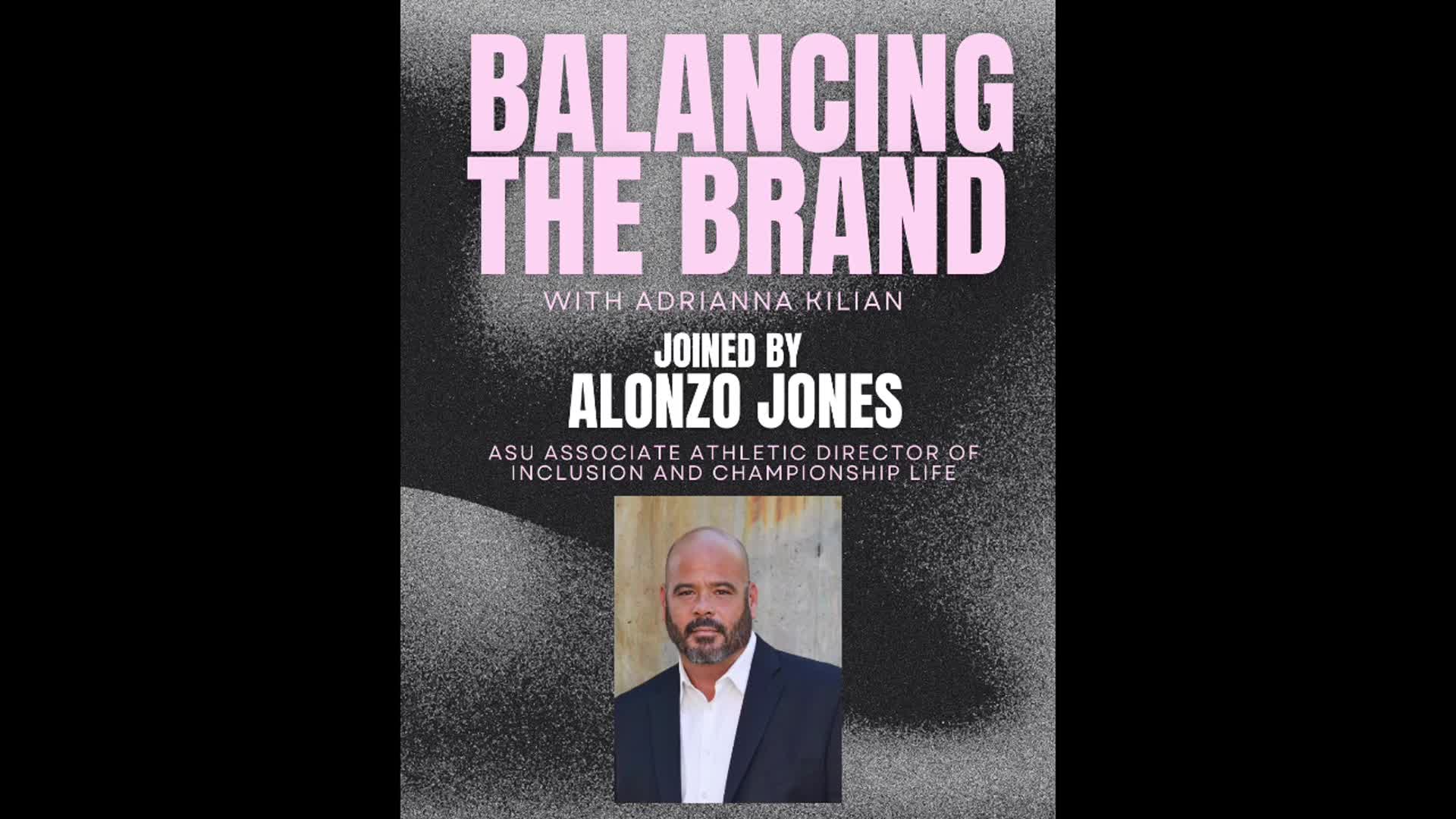
I want to thank Audrey Taylor for joining me for today's balancing the brand podcast. Next week, I'll be joined by Alonzo Jones, the championship Life program leader at ASU. Thank you for tuning in, and we'll see you on the next episode of Balancing the Brand.
SOURCE:
Audrey Taylor
(Emailed through SID: Stayson Isobe - Stayson.Isobe@nau.edu)